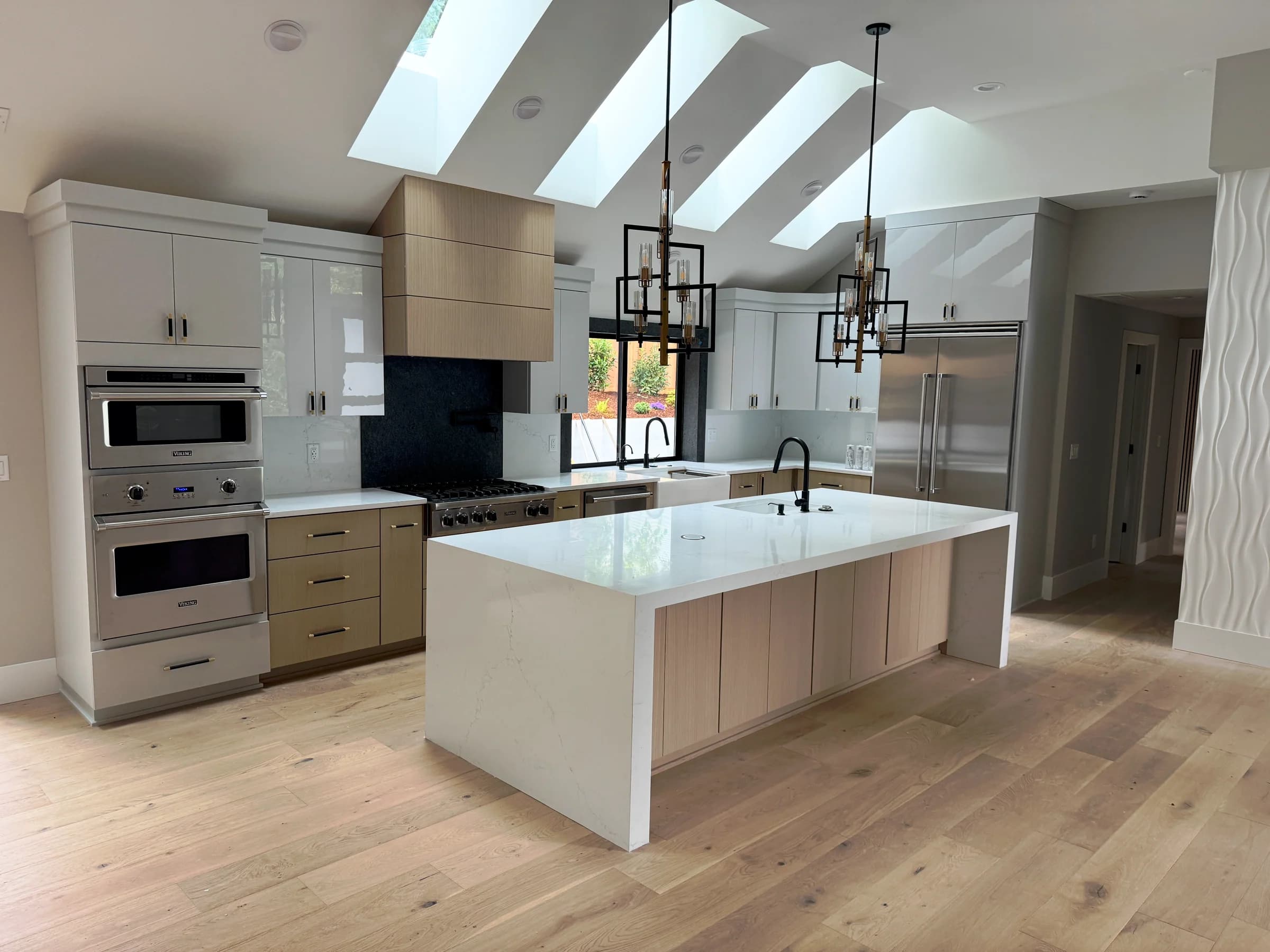
First, name the change you want to see.
“Less orange” can mean a quieter warm tone, a cooler brown, a lighter natural appearance or simply a less glossy finish. Those are different targets. Bring a reference image, then describe what you like about it: the lightness, the grain, the warmth or the sheen. That gives the conversation more precision than a stain name alone.
Also identify what should remain unchanged. You may love the cabinet profile and want to retain the wood's variation, or you may be trying to make several disconnected runs look more consistent. A clear goal helps determine whether the project is a refresh, a color adjustment or a more involved removal and refinishing process.
The existing finish sets the starting line.
A cabinet door is more than its wood species. Existing stain, clear finish, wear, prior repairs and sun exposure all contribute to its current appearance. Two oak kitchens can therefore require different work to reach a similar visual direction. Photographs should include a well-protected area as well as the areas that have changed most.
Share any product information from past work if you have it. A previous finish can affect compatibility and preparation, and an unknown coating may call for further investigation. A fresh clear coat is not a universal answer to every discolored surface. We first need to understand whether the color is in the wood, the stain, the finish or a combination of them.
Refresh, deepen or lighten: three different conversations.
Refreshing wood generally means preserving its recognizable character while addressing the condition of the finish. Moving darker may allow a different approach than moving lighter, but it still requires a compatible system and a realistic assessment of the underlying color. Adding color does not erase the wood's natural pattern.
A lighter result usually involves removing the existing finish and addressing the color beneath it, rather than applying a pale stain over a dark surface and expecting the old color to vanish. How far that can go depends on the material and its condition. Staining is transparent enough for the starting point to matter, so feasibility comes before committing to the final shade.
| Your goal | The useful first question |
|---|---|
| Keep a similar tone | Is the existing finish sound enough for a compatible refresh? |
| Move darker or change warmth | How will the old color and wood affect the new appearance? |
| Go noticeably lighter | What removal is required, and can the material tolerate it? |
| Return painted cabinets to wood | What wood, veneer and repairs are hidden beneath the paint? |
Back to wood deserves a test before a promise.
NS offers stripping to bare wood, but the work must suit the cabinet. A painted surface may hide attractive wood, or it may hide filled damage, mixed species, thin veneer and replacement parts. Flat panels and detailed profiles can also present very different removal challenges. More labor does not necessarily guarantee the uniform appearance in an inspiration image.
Before approving a full back-to-wood project, discuss how a representative area will establish the likely result. Pay particular attention to door edges, panels and existing repairs. If the exposed materials do not support the look you want, a painted finish or a different scope may be the better choice. Discovering that early protects both the cabinets and your expectations.
Honey oak does not have to become white oak.
If warm oak is the starting point, it helps to separate the species from the color that sits on it. Removing or changing a finish can alter the overall tone, but it does not change the wood into another species or rewrite its grain pattern. A pale inspiration kitchen may use different wood, veneer selection and door construction.
That does not make your goal impossible to explore. It means the target should be expressed as a finish on your wood: lighter where feasible, less warm, deeper brown or a refreshed natural tone. Avoid judging the result from a tiny online swatch. The door's full grain pattern and the room's lighting are part of the color you will actually live with.
Look at the whole room and the whole cabinet run.
Stained cabinetry often sits beside other wood: floors, beams, interior doors, a stair rail or a built-in. Decide whether the new finish should match one of those surfaces or simply work comfortably with it. Exact matching across different materials is a much more demanding target than a coordinated palette.
Within the kitchen, note areas with different exposure or construction. A refrigerator panel, island back and replacement drawer front may not respond exactly like the original doors. Some variation is part of visible wood, while unexpected differences need discussion. Review color and sheen in the room's normal lighting and agree on the appearance of representative pieces before the full project moves ahead.
Allow the schedule to follow the finish.
Stain work should be scheduled around the chosen process, including removal where needed, preparation, color work and the protective finish. A typical kitchen project takes about a week, but that is a general planning reference, not a guaranteed duration for stripping or a substantial color change. The actual scope determines the time.
Ask which components leave the home, how the installed surfaces will be protected and when the room can be used. Also ask for handling and cleaning guidance for the selected finish. Product directions vary, and an early dry surface can still require care. It is better to plan for the real sequence than to compress it around an assumed completion date.
Begin with the wood you have and the direction you want.
If you’d like to share photos, text a wide room view to 360-903-6298, a straight-on cabinet run, a close-up showing the grain and a worn or discolored area. An inspiration image is helpful if you explain the feature you want to borrow. Tell us whether the cabinetry has been painted or refinished before and whether any pieces have been replaced.
You can contact NS Wood Finishing at 360-903-6298 or request a quote request. We can start by narrowing the options before you choose a stain color. A good wood-finishing project respects what the material can do while making the room feel more like the home you want now.
LET’S LOOK AT YOUR PROJECT
Bring the question back
to your own cabinets.
A wide view, a close-up, and any areas of concern are enough to start a useful conversation.
Get my quoteYour questions, answered.
01Can you stain my cabinets lighter?+
A lighter appearance requires assessing the current finish, existing color and cabinet material. It often involves removal and more preparation than a darker change. The achievable result should be established before the full project is approved.
02Can I keep the grain but reduce the orange tone?+
That is a useful goal to explore. The wood, stain and clear finish all affect the appearance. Show us the current cabinets and a reference for the direction you prefer; the best process depends on that starting point.
03Can painted cabinets be returned to natural wood?+
Sometimes. NS offers stripping, but the paint may conceal mixed materials or repairs. A closer assessment is needed to decide whether exposing the wood can deliver an acceptable appearance.
04Will every door have exactly the same grain and color?+
Visible wood has natural variation, and replacement pieces or different materials can add more. Discuss the level of consistency you want and review representative areas rather than assuming every panel will look identical.
Sources & further reading
Research reviewed October 2026. Population and housing data describe the source sample, not an individual home or its cabinetry. Manufacturer references are educational and do not identify the system used by NS.